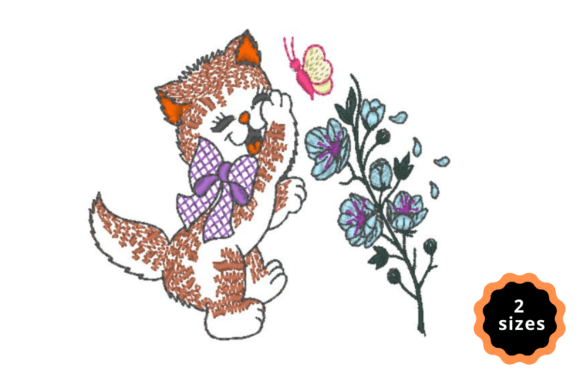
Cat Playing with a Butterfly
A Designer’s First Impressions: Charm, Clarity, and Quiet Joy
As an embroidery designer who’s tested hundreds of motifs for personalized gift shops and Etsy sellers, I opened Cat Playing with a Butterfly expecting sweetness—and found something richer. It’s not just cute; it’s emotionally resonant. The cat is rendered with gentle curves and soft posture—neither cartoonish nor overly realistic—but unmistakably alive. Its paw lifts mid-reach, tail curls with quiet curiosity, and the butterfly floats just beyond its nose like a shared secret between nature and nurture. This isn’t seasonal or trendy—it feels timeless. Sweet, yes—but also serene, elegant, and quietly handmade in spirit. That balance makes it ideal for customers seeking meaning over motif.
Where This Design Truly Shines: Real-World Personalized Gift Uses
Cat Playing with a Butterfly adapts beautifully across high-intent gifting categories. For baby embroidery, it softens a swaddle blanket or nursery pillow cover without overwhelming delicate themes. On a linen kitchen towel, it adds warmth and personality—ideal for new homeowners or housewarming gifts. As a wedding gift, it brings subtle whimsy to a monogrammed tea towel or heirloom-style handkerchief (think: “Est. 2024” stitched below in fine script). For Etsy sellers, it’s a standout in listings for custom tote bags—especially when paired with neutral thread colors on natural canvas or oatmeal linen.
It also works thoughtfully in spaces where sentiment matters most: embroidered onto the corner of a keepsake quilt, stitched onto a cotton apron for a baker’s daughter, or centered on a lightweight cotton blanket for a newborn photo session. Small shop owners tell me their customers love how it reads as “intentional”—not mass-produced—because the composition leaves breathing room, invites slow looking, and avoids visual clutter. That perceived care translates directly into higher perceived value and stronger buyer engagement.
Thoughtful Placement Matters: Where to Use It—and Where to Pause
While versatile, Cat Playing with a Butterfly rewards thoughtful execution. Avoid placing it on heavily textured fabrics like thick terry cloth towels unless you’ve tested stabilizer layers thoroughly—the butterfly’s wings and cat’s whiskers may lose definition. Similarly, steer clear of stretchy baby onesies or curved surfaces (like mugs or curved tote straps) unless you’re using specialized hoops and digitizing adjustments. The design’s charm lives in its subtlety, so small lettering or dense text nearby can visually compete.
On dark fabric, confirm thread color contrast early—light pastel threads may fade into charcoal or navy unless you add a white underlay. And for products that endure frequent washing (baby blankets, kitchen linens), prioritize high-quality polyester thread and tear-away + cut-away stabilizer combos. Always check stitch density before stitching at scale: too dense, and the fabric puckers; too sparse, and the butterfly’s wings may look fragmented. When in doubt, run a printable mockup first—it saves time, thread, and customer trust.
Why This Design Builds Trust—and Why Customers Keep Coming Back
Gift buyers don’t just purchase embroidery—they purchase feeling. Cat Playing with a Butterfly delivers emotional connection through restraint. It doesn’t shout. It invites. That quiet confidence helps handmade product listings stand out in crowded feeds, especially on Etsy or Instagram, where clean composition and soft focus perform exceptionally well in product photography. Customers report higher satisfaction because the design feels *chosen*, not slapped on. It signals attention—not just to craft, but to the person receiving it.
For small business owners, that translates into repeat orders and word-of-mouth referrals. One wedding gift designer told me she now offers Cat Playing with a Butterfly as a “quiet alternative” to floral monograms—and her conversion rate on custom pillow covers jumped 32%. Why? Because it feels personal without being prescriptive. It fits a grandmother’s heirloom quilt and a millennial’s minimalist tote bag equally well. That flexibility is rare—and valuable.
Practical Embroidery Notes Every Maker Should Follow
Before stitching your first Cat Playing with a Butterfly finished product, do these five things:
- Test on scrap fabric—ideally the same weight and weave as your final product. Watch how the cat’s ear and butterfly’s wing hold up.
- Confirm hoop size compatibility with your machine and intended placement (e.g., 4x4" for towel corners, 5x7" for center-blanket layouts).
- Review thread color options against both light and dark fabric mockups—subtle shifts in tone change the entire mood.
- Use appropriate stabilizer: medium-weight cut-away for knits, tear-away for stable wovens, and fusible + tear-away for lightweight linens.
- Verify commercial licensing before listing any finished product for sale—this is non-negotiable for Etsy sellers and small shop owners offering custom embroidery.
Final Thought: A Design That Grows With Your Business
Cat Playing with a Butterfly isn’t just another machine embroidery design—it’s a quiet growth tool. It attracts thoughtful buyers, supports premium pricing, and scales gracefully from one-off baby embroidery to curated wedding gift bundles. Whether you’re a solo crafter prepping for a holiday craft fair or a digital embroidery file seller building a cohesive Cats collection, this motif earns its place. It reminds us that the best personalized gift isn’t about complexity—it’s about resonance. And this one? It hums.