Funny Little Man: A Designer’s Real-World Embroidery Review
First Impressions: Charm That Doesn’t Overpromise
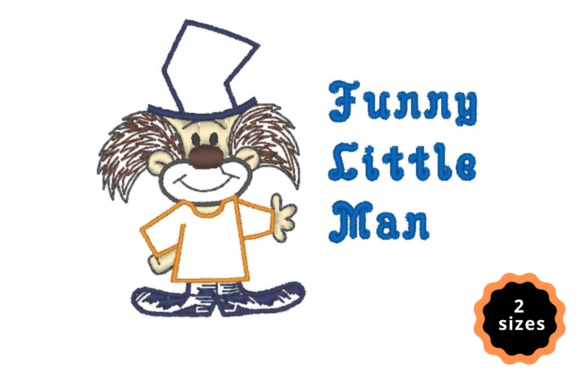
When Funny Little Man popped up in my design library, I paused—not because it’s flashy, but because it feels quietly intentional. It’s not a cartoon explosion or a hyper-detailed portrait; it’s a soft, stylized figure with gentle curves, expressive eyes, and just enough whimsy to land as sweet rather than silly. As a designer who’s stitched hundreds of baby-themed embroidery files, I immediately sensed its natural home: baby embroidery, nursery decor, and personalized gifts where warmth matters more than wow-factor. The layout is compact but balanced—no awkward limbs stretching beyond the frame, no tiny features lost in stitch density. It reads clearly at 3–4 inches wide, which makes it versatile for everything from tea towel corners to onesie chest placements.
Where It Shines (and Where It Needs Care)
I tested Funny Little Man on a custom embroidered tote bag for a local boutique—cotton canvas, medium weight, tear-away + cutaway stabilizer combo. It stitched cleanly, with smooth satin stitch defining the outline and soft fill stitch giving body without puffing. No thread breaks, no puckering. That said, I wouldn’t push it onto ultra-thin jersey or stretchy bamboo knits without testing first—the design relies on clean edge definition, and those fabrics can blur fine contours if stabilization isn’t dialed in.
On dark fabric? Yes—but only with high-contrast thread colors. I ran it in ivory on navy twill for a baby blanket edge and loved the result. On light fabric? It holds up beautifully in charcoal or navy thread, especially when paired with subtle applique design accents (though Funny Little Man itself isn’t an applique design—it’s a full machine embroidery design). For caps or curved surfaces, keep it under 3 inches wide and avoid placing it over seams or deep crowns unless you’ve verified hoop clearance.
A Real Project: Stitching Trust Into a Baby Gift Set
Last week, I used Funny Little Man across three pieces of a handmade baby gift set: a cotton muslin swaddle (center chest), a linen bib (upper left corner), and a knit beanie (front band). The swaddle was the easiest—light stabilizer, crisp results. The bib needed extra tear-away beneath the stitching area to prevent shadowing through the thin fabric. The beanie? Tricky. I resized to 2.75 inches, used balled-up tissue inside the cap for support, and went with a lightweight cutaway. It held. Customers noticed—not the stitches, but the *feeling*: soft, sincere, unhurried. That’s the quiet strength of Funny Little Man. It doesn’t shout “look at me!”—it invites touch, pause, and recognition. For Etsy sellers or small shop owners building brand consistency around gentle, modern baby goods, that resonance matters more than trend-chasing.
What It Adds (and What It Doesn’t)
Funny Little Man elevates visual appeal without demanding perfection from the embroiderer. Its moderate stitch density means it won’t overwhelm lightweight fabrics—or your machine’s memory. It reads well in printable mockups, whether you’re prepping listings for Etsy or pitching boutique branding. And because it’s rooted in the Baby Animals category but avoids literal animal shapes, it sidesteps age-specific limitations. A toddler might giggle at it; a grandparent might call it “just right.” That flexibility boosts giftability and broadens your customer base.
That said, it won’t carry heavy branding alone. Don’t expect bold typography or intricate borders baked in—it’s a singular, focused embroidery file. If you need a full logo treatment or layered monogram integration, plan to pair it thoughtfully. Also, while it works beautifully as a standalone embroidered patch (heat-seal or sew-on), don’t assume it’s optimized for iron-on adhesion without testing stabilizer and backing choices first.
Designer Notes You’ll Actually Use
- Always test on scrap fabric matching your final project’s weight, weave, and stretch—even if it’s “just cotton.”
- Check thread color contrast before stitching: what looks distinct on screen may blend on fabric.
- Review stitch density in your embroidery software—look for tight clusters that could cause stiffness or wear.
- Confirm hoop size early. If your machine has limited throat space, verify Funny Little Man fits comfortably with margin to spare.
- Inspect small details like eyes or smile curves at 200% zoom—they’re often where quality gaps hide.
- Test black-and-white mockups to assess silhouette clarity before committing to color.
- Compare light/dark backgrounds—some designs lose charm on one side of the spectrum.
- Use proper stabilizer: medium cutaway for knits, tear-away + light cutaway for stable wovens, fusible for delicate linens.
- Verify licensing before selling finished products or bundling the digital embroidery file—especially for commercial embroidery or craft business use.
Final Thought: A Design That Serves the Maker
Funny Little Man isn’t groundbreaking—but it’s reliable, emotionally intelligent, and built for real work. It fits naturally into sweatshirt embroidery, personalized gift lines, holiday embroidery bundles, and small shop product development. It doesn’t ask for special treatment, yet rewards attention to detail. For crafters stitching for joy, Etsy sellers scaling handmade product lines, or apparel decorators curating cohesive collections, this embroidery design earns its place—not as a novelty, but as a quietly confident tool. It reminds us that sometimes, the most effective design assets aren’t the loudest ones. They’re the ones that feel like they belong.