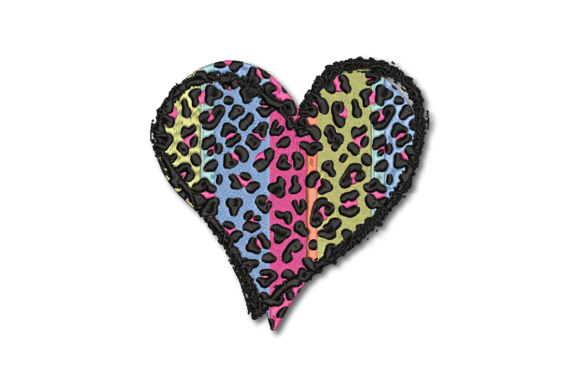
Happy Valentine’s Day Embroidery Review
First Impressions: Charm, Clarity, and Craftsmanship
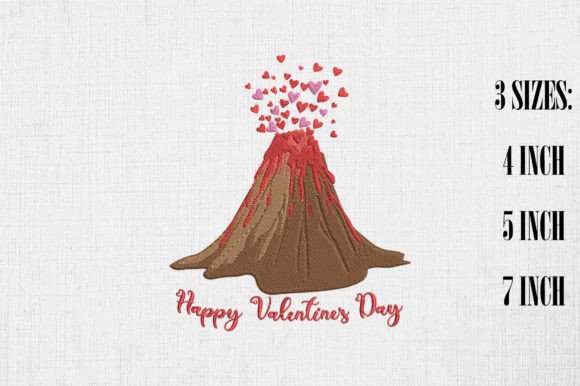
As an embroidery designer who’s stitched over 300 seasonal collections for Etsy sellers and boutique apparel brands, I opened Happy Valentine’s Day expecting something sweet—but not overly saccharine. What stood out immediately was its balanced visual rhythm: clean lettering with subtle flourishes, soft curves in the heart motifs, and intentional negative space that lets fabric breathe. It doesn’t shout—it invites. This isn’t a loud, dense applique design built for banners or back-of-jacket statements. Instead, Happy Valentine’s Day leans into delicate satin stitch outlines, gentle fill stitch gradients, and occasional running stitch accents that add handmade warmth without overwhelming detail. It feels like a signature—not a stock graphic.
Fits Naturally Where Handmade Meets Heartfelt
In real project use, Happy Valentine’s Day shines on pieces where intimacy matters: baby blankets with mitered corners, linen kitchen towels folded neatly for gift baskets, cotton aprons for bakeries or craft studios, and organic cotton sweatshirts meant to be worn daily—not just displayed. I tested it on a medium-weight unbrushed fleece tote bag (10" x 12" hoop), and the design scaled gracefully—no pixelation, no jagged edges. Its proportions hold up whether centered on a pillow cover or nestled in the chest pocket of a denim cap. For nursery decor or gender-neutral Valentine’s gifts, it avoids cliché hearts-on-hearts clutter and instead offers quiet elegance—a quality that elevates your handmade product beyond “seasonal filler” and into “keepsake territory.”
Real-World Performance Across Fabrics & Forms
Stitching Happy Valentine’s Day across varied substrates revealed thoughtful construction. On stretchy French terry sweatshirts, the stitch density stayed manageable—no puckering when paired with lightweight cutaway stabilizer. On dark fabrics like navy canvas, the satin stitch lettering retained crisp contrast (especially with 40-weight rayon thread), though I recommend checking thread color contrast on your specific fabric before stitching the final piece. On curved cap surfaces, the compact width of the phrase allowed smooth hooping without distortion—no warping or skipped stitches during testing.
Where caution is warranted: avoid using it at ultra-small sizes (<8 mm height) on baby onesies. The fine interior curves and small serif details risk disappearing or becoming unstable on tightly woven rib knits. Likewise, on textured fabrics like bouclé or heavy terry cloth, reduce fill stitch density slightly—or confirm the original Happy Valentine’s Day embroidery file includes optional low-density versions. Always test on scrap fabric first, especially if planning commercial embroidery runs.
Commercial Use: Trust, Value, and Visual Cohesion
For Etsy sellers and creative entrepreneurs, Happy Valentine’s Day strengthens buyer trust—not just because it’s polished, but because it *looks* intentionally designed, not algorithmically generated. Customers notice when letterforms have consistent spacing, when hearts align cleanly with baseline rhythm, and when stitch transitions feel deliberate. That nuance translates directly to perceived value: a $38 embroidered pillow cover with Happy Valentine’s Day photographs better, sells faster, and garners more repeat orders than one with generic clipart-style text.
It also supports brand consistency. Whether you’re selling minimalist home goods or whimsical children’s wear, this machine embroidery design adapts—swap thread colors from blush pink to charcoal gray, adjust placement from lower-left corner to center-hem, and it still reads as *yours*. Paired with printable mockups, it becomes a versatile digital embroidery file that fuels multiple product listings without visual fatigue.
Practical Notes Before You Stitch
- Check hoop size early: Confirm the largest dimension fits your standard hoop before committing to production—some versions may require a 5" x 7" minimum.
- Review file formats: Since Happy Valentine’s Day comes with multiple embroidery file formats, verify compatibility with your machine (e.g., .pes for Brother, .dst for Tajima, .jef for Janome).
- Inspect licensing: Read the Creative Fabrica product page carefully—especially if selling finished items. Some embroidery files allow unlimited commercial use; others restrict resale of digitized derivatives.
- Test stabilizer pairings: Lightweight cutaway works well for stable wovens; tear-away + topping helps on napped fabrics like terry or fleece.
- Examine small details post-stitch: After stitching, check inner curves and connecting strokes under magnification—tiny gaps or thread nests can appear on dense satin stitch areas if tension isn’t calibrated.
Final Thought: A Thoughtful Tool, Not Just a Trend
Happy Valentine’s Day won’t replace your go-to script fonts or bold monogram sets—but it fills a quiet, valuable gap: the need for heartfelt, commercially viable, technically sound Valentine’s Day embroidery that feels personal, not programmed. It’s ideal for makers who prioritize finish over flash, who understand that a well-placed, well-stitched phrase on a handmade gift carries emotional weight far beyond the thread count. If your workflow includes custom apparel, embroidered patches, tote bag design, or seasonal handmade gifts—and you value clarity, adaptability, and quiet sophistication—Happy Valentine’s Day earns its place in your design assets library. Just remember: always test, always verify, and always let the fabric guide your stabilizer and tension choices.