INRI Cross with Ears of Wheat and Blanket
A Thoughtful Seasonal Addition for Faith-Based Holiday Collections
As an embroidery designer who’s built holiday product lines for Etsy shops, craft fairs, and small-batch apparel brands for over 12 years, I approach every new Creative Fabrica embroidery file with two questions: Does it tell a story people want to give—and receive—during the holidays? And Will it stitch cleanly across the range of fabrics and formats my customers actually buy? The INRI Cross with Ears of Wheat and Blanket passed both tests on first review.
First Impressions: Rustic Reverence Meets Warmth
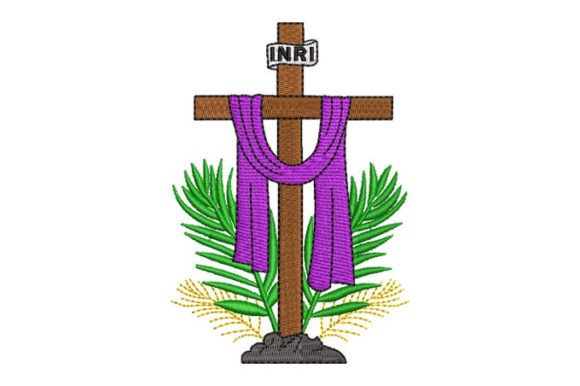
This isn’t a flashy, high-contrast religious emblem—it’s quietly grounded. The cross stands centered and serene, flanked by gently curved ears of wheat that evoke harvest, provision, and quiet abundance. The soft blanket draped at its base adds texture, tenderness, and a subtle nod to humility and care. Together, they create a mood that’s spiritual without being stern, seasonal without being overtly Christmas-specific, and elegant without sacrificing warmth. It reads as rustic-elegant—ideal for handmade gift buyers who value meaning over mass-market motifs.
Where This Design Shines in Real Holiday Selling
I’ve already sketched out six product applications for my own fall/winter lineup—and each one feels commercially viable:
- Sweatshirt embroidery: Centered on cream or charcoal French terry, this design reads beautifully at 4–5 inches wide—large enough to be legible, small enough to keep the garment feeling balanced and wearable.
- Tote bag design: On natural canvas or unbleached cotton, the wheat and blanket translate into tactile, earthy charm—perfect for church bazaars, faith-based retreats, or “gift-with-purchase” bundles.
- Kitchen towel embroidery: Stitched onto linen-cotton blends, it becomes a meaningful hostess gift—especially when paired with a handwritten note about gratitude and grace.
- Pillow cover: At 6–7 inches tall, the composition holds up well on 18" square covers. The blanket element gives visual weight; the wheat adds organic movement.
- Embroidered patch: Clean outlines and moderate stitch density make this a strong candidate for iron-on or sew-on patches—ideal for denim jackets, backpacks, or baby blankets.
- Personalized gift: When stitched onto a monogrammed onesie or baptismal blanket (with careful thread color selection), it deepens emotional resonance without overwhelming the piece.
Why Buyers Connect With This During Holiday Shopping
Holiday shoppers aren’t just buying decoration—they’re buying intention. The INRI Cross with Ears of Wheat and Blanket carries layered symbolism that aligns with what customers seek in meaningful gifts: sacrifice (INRI), sustenance (wheat), and compassion (blanket). That emotional clarity builds trust faster than generic seasonal motifs. On Etsy listings or social media previews, it stands out—not because it’s loud, but because it feels considered. It also supports brand consistency for sellers who focus on faith-rooted, handmade values across their shop.
Practical Considerations Before You Stitch
This is a beautiful machine embroidery design—but like any thoughtful seasonal embroidery file, it rewards preparation:
- Test thread colors on light and dark fabric: Gold or ecru works elegantly on ivory linen; deep olive or charcoal gray reads reverently on navy or black toweling. Avoid overly bright metallics—the mood leans toward subtlety.
- Check stitch density before scaling: The wheat heads and blanket folds contain gentle fill areas. If resizing beyond recommended dimensions, verify that stitch count remains balanced—not too sparse (loses definition) or too dense (causes puckering on delicate fabrics).
- Confirm hoop size and stabilizer needs: For kitchen towels or sweatshirts, a medium-weight cutaway stabilizer prevents shifting. For lightweight baby blankets, switch to tear-away + topping for smooth surface detail.
- Review small details after stitching: The INRI lettering is legible but not oversized—ensure your machine handles fine script cleanly, especially on textured fabrics like terry cloth or bouclé.
- Plan matching color palettes early: Pull inspiration from natural tones—oatmeal, sage, clay, charcoal—to reinforce the design’s grounded aesthetic across packaging, mockups, and product photography.
Use With Care On These Applications
While versatile, the INRI Cross with Ears of Wheat and Blanket benefits from mindful placement:
- Avoid using it on tiny hoop sizes (<4 inches)—the wheat ears lose nuance, and the blanket texture flattens.
- Don’t place it on highly stretchy garments (like ribbed knits) without proper stabilizing and test runs—dense areas may ripple.
- Be cautious on curved caps or small-apron pockets—the composition relies on vertical balance and may distort if forced into tight curves.
- For repeated-wash items like baby blankets or kitchen linens, choose high-quality polyester thread and lock stitches securely—especially where wheat stems meet the cross arms.
Final Thoughts for Seasonal Sellers
The INRI Cross with Ears of Wheat and Blanket fills a quiet but powerful niche in holiday embroidery: it’s spiritually resonant without being doctrinally prescriptive, seasonally rich without being time-bound, and artisan-crafted in feel—even as a digital embroidery file. For Etsy sellers, small shop owners, and handmade gift makers, it’s a low-risk, high-meaning addition to limited-edition collections. It pairs naturally with other seasonal embroidery files—think simple olive branches, linen-textured borders, or minimalist shepherd motifs—to build cohesive, emotionally intelligent product lines.
If you’re curating a holiday collection rooted in reverence, simplicity, and handmade integrity, this Creative Fabrica embroidery design earns its place—not as filler, but as a focal point. Just remember to check the product details on Creative Fabrica for exact file formats, licensing terms for commercial embroidery, and recommended hoop size before launching finished products. With thoughtful execution, the INRI Cross with Ears of Wheat and Blanket won’t just decorate your items—it’ll deepen their meaning for the people who give them, receive them, and hold them close.