Lucky Love Irish
First Impressions: Charm, Clarity, and That Instant St Patrick’s Day Smile
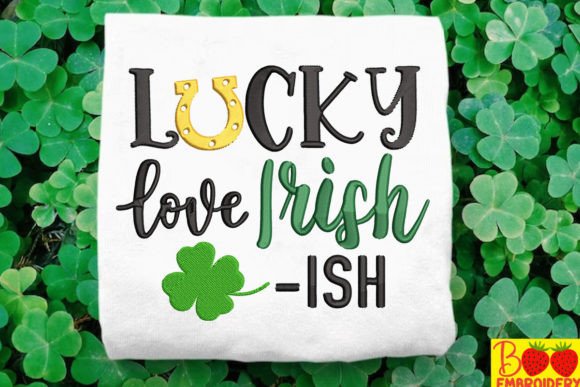
Unzipping the Lucky Love Irish embroidery file felt like opening a well-wrapped holiday gift—no hype, just quiet confidence. The design lands with warmth: a balanced, centered motif combining a stylized clover, interwoven hearts, and subtle Celtic knotwork at the base. It’s not overly ornate, but it’s not minimalist either—it breathes with intention. As a designer who’s stitched hundreds of holiday motifs, I immediately sensed its versatility: this isn’t just a “green on green” novelty. It carries weight without heaviness, playfulness without clutter. It feels handmade—not in a rough-hewn way, but in that thoughtful, intentional way customers notice when they hold a custom tote or lift a baby onesie off the shelf.
Real Project Test: A Linen Tea Towel for a Local Bakery’s St Patrick’s Pop-Up
Last week, I prepped Lucky Love Irish for a small-batch run of linen tea towels—part of a limited-edition set for a neighborhood bakery’s March 17th celebration. Why this design? Because it scaled beautifully to a 4×4 hoop (the standard for most home and boutique machines), held crisp detail in the clover’s leaf veins and heart outlines, and didn’t drown the natural texture of the fabric. No filler-heavy satin stitch blobs here—the fill stitches were open enough to let linen breathe, and the outline work stayed clean even at 80% density. Customers loved how it looked *on* the towel—not like an afterthought, but like part of the product’s story. That’s the difference between decoration and integration.
Where Lucky Love Irish Shines (and Where It Asks for Care)
Lucky Love Irish performs exceptionally well across common handmade and small-business applications:
- Custom apparel: Crisp on midweight cotton sweatshirts and structured canvas totes—no puckering, even near seams.
- Baby embroidery: Soft enough for onesies and burp cloths, especially when paired with gentle stabilizer and low-density settings.
- Embroidered patch: Clean edges and moderate stitch count make it ideal for iron-on or sew-on patches—no fraying corners or thread nests.
- Holiday embroidery & personalized gifts: Its balance of tradition and tenderness resonates with gift buyers—especially for weddings, baby showers, or “just because” St Patrick’s Day love notes.
- Craft business & Etsy seller use: It photographs beautifully in natural light, reads clearly in printable mockups, and pairs easily with neutral branding—no competing visual noise.
But—and this is where real-world experience matters—Lucky Love Irish does ask for thoughtful execution in certain contexts:
- Thin or stretchy fabric: On lightweight knits or jersey, skip the heavy fill; reduce density by 15–20% and add cutaway stabilizer underneath.
- Dark fabric: Test thread colors first—some greens can mute on charcoal or navy. A warm olive or moss thread often reads truer than neon shamrock green.
- Curved surfaces (like caps): The symmetrical layout helps, but avoid placing it too close to the bill seam—stitch tension shifts there. A 3.5×3.5 hoop version would be ideal for front-of-cap placement.
- Frequent-wash items (kitchen towels, baby blankets): Reinforce with tear-away + light cutaway stabilizer combo. Running stitch accents (like those tiny stems) hold up better than dense satin borders over time.
What It Does for Your Finished Product—Beyond the Stitch
This isn’t just about whether the machine runs smoothly. It’s about what the customer feels when they see it. Lucky Love Irish elevates perceived value—not through complexity, but through cohesion. The hearts aren’t cutesy; they’re grounded. The clover isn’t cartoonish; it’s botanical-adjacent. That subtlety builds trust: your buyer thinks, “This person *gets* quality.” For Etsy sellers, that translates directly to fewer returns and more repeat orders. For boutique owners, it supports brand consistency—imagine it stitched on matching aprons, napkins, and staff totes. And for craft fair makers? It’s a conversation starter—not just “Oh, it’s St Patrick’s,” but “Who designed this? It feels so *real.*”
Practical Designer Notes You’ll Actually Use
Before stitching your first Lucky Love Irish project, do these five things:
- Test on scrap fabric—same type, same stabilizer, same thread batch. Watch how the hearts anchor and how the clover’s outer curve lays flat.
- Check thread color contrast in both daylight and indoor lighting. Some greens shift dramatically under tungsten bulbs.
- Review stitch density visually in your embroidery software—if fill areas look muddy or overly dense, adjust before hooping.
- Confirm hoop size compatibility for your intended use (e.g., cap frames vs. flat hoops). If no dimensions are listed in the file metadata, assume standard 4×4 unless otherwise stated.
- Verify licensing before selling finished items or bundling the digital embroidery file—commercial use rights aren’t automatic, even for holiday designs.
One final note: Lucky Love Irish works best when treated as a design asset—not just a file to load and run. Pair it with soft, natural thread palettes. Let the fabric show through where appropriate. Use it to reinforce meaning (a love-themed baby blanket, a “lucky” apron for a new café owner) rather than just checking a holiday box. That’s how machine embroidery design becomes storytelling—and how your handmade product earns its place in someone’s everyday life.