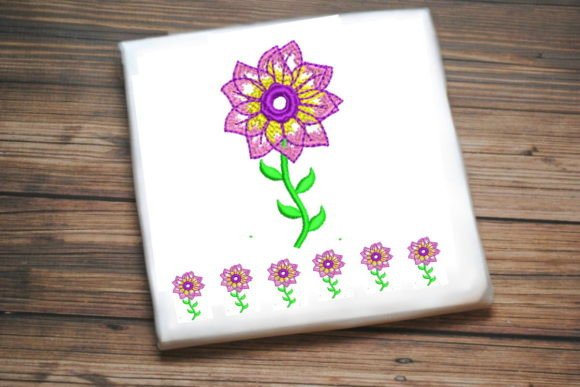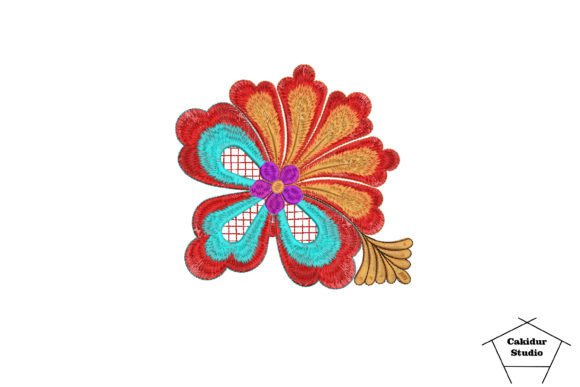
First Zen Flower
A Craft Fair Designer’s Real-World Review
As someone who’s stitched, sold, and restocked over 200 embroidery designs across 12 craft fairs and three Etsy shops, I opened First Zen Flower with one question: “Will this stop someone mid-aisle?” The answer? Yes—especially when stitched cleanly on a linen tea towel or a heavyweight canvas tote. The title alone hints at calm intentionality—not loud or trendy, but quietly confident. It reads as minimal, elegant, and handmade premium. Not farmhouse, not boho, not kawaii—but serene, intentional, and deeply wearable. That’s rare in the Single Flowers category, where many designs default to either overly literal botany or cartoonish simplicity.
Where First Zen Flower Shines on Craft Fair Products
This machine embroidery design thrives where subtlety meets substance. On a natural cotton apron? Perfect—it adds quiet sophistication without competing with flour-dusted pockets or wooden spoons. On a black twill market bag? Striking contrast, especially if you use soft ivory or sage thread colors. As a small embroidered patch sewn onto a denim jacket collar? Instant charm. And on a set of matching pillow covers for a boutique display? Cohesive, calming, and highly photographable.
It’s less ideal as a large-scale focal point on a baby onesie (too delicate) or a curved cap front (fine details may distort), but it excels as a refined accent: centered on a tea towel hem, nestled in the corner of a fabric pouch, or aligned just above a tote bag’s side seam. For Etsy sellers, First Zen Flower is a strong candidate for printable mockups—its clean lines translate beautifully into lifestyle shots with neutral backdrops, dried florals, and ceramic mugs.
Production Practicality: What You’ll Actually Love (and Watch For)
From a production standpoint, First Zen Flower feels designed for real-world output—not just digital perfection. It’s easy to understand at a glance: no confusing layers, no ambiguous outlines, no tiny lettering (a huge plus—no readability panic on 2-inch patches). It scales well from 2.5” to 4.5”, making it flexible for both small shop products and larger booth samples.
That said, tread carefully with dense stitch areas. If your version includes tightly packed satin stitches in the petal centers—or subtle gradient fill work—test stitch density on scrap fabric first. High stitch density can cause puckering on textured towels or stiff stabilizer buildup on lightweight chambray. Also confirm hoop size before batching: if it requires a 5x7 hoop minimum, that limits quick turnaround on smaller machines during fair prep.
Visual Impact & Booth Performance
In person, First Zen Flower stands out by *not* shouting. At a crowded handmade market, bold graphics blur together—but this design invites pause. Customers lean in. They touch the texture. They ask, “Is that hand-stitched?” (Even though it’s machine embroidery—proof of quality execution.) That tactile response boosts perceived value, supports higher price points, and strengthens brand consistency for makers building a cohesive line of mindful, nature-adjacent goods.
On your booth table, pair it with muted earth tones, unbleached cotton, and matte ceramics. Avoid clashing patterns nearby—First Zen Flower doesn’t compete well with busy geometrics or script-heavy typography. Let it breathe. Use it consistently across 3–4 product types (e.g., tea towels + pouches + patches) to build recognition without repetition fatigue.
Careful-Use Notes Every Embroidery Designer Should Know
- Dark fabric? Confirm thread contrast—ivory or pale gold works better than white on charcoal or navy.
- Textured towels? Use medium-weight cutaway stabilizer and reduce top tension slightly to prevent skipped stitches in raised terry loops.
- Curved cap surfaces? Skip unless you have a cap frame—petal edges may warp or stretch unpredictably.
- Small sizes? Below 2”, fine details (like thin stem lines or delicate stamen) risk losing clarity—verify legibility on your test run.
- Thick fabrics? Double-check needle type (90/14 sharp) and stabilizer pairing—dense weaves demand extra support to avoid distortion.
Designer-Level Prep Checklist
- Test the embroidery file on scrap fabric matching your intended product (e.g., terry cloth for tea towels).
- Compare thread colors across 3–4 fabric bases—light, medium, and dark—to lock in your best contrast combo.
- Review spacing between elements—tight petal overlaps may require slight digitizing tweaks for cleaner stitch-out.
- Confirm hoop size compatibility with your primary machine(s); don’t assume “standard” fits all.
- Inspect stitch density visually—look for excessive underlay or overlapping satin columns that could cause bulk.
- Use the right stabilizer: cutaway for knits and towels, tear-away for stable wovens like linen or quilting cotton.
- Create at least one real finished product—not just a hoop sample—before listing or packing for the fair.
- Compare how it photographs next to your other bestsellers; does it hold its own in flat-lay and handheld shots?
- Verify commercial licensing terms—this is essential before selling any finished product using the digital embroidery file.
Final Thought: Why First Zen Flower Fits Your Creative Business
First Zen Flower isn’t just another floral motif—it’s a strategic asset. It bridges the gap between meditative aesthetics and market-ready practicality. For the Etsy seller refreshing their spring collection, it’s a low-risk, high-return addition. For the boutique maker curating gift sets, it adds quiet luxury. For the craft fair vendor racing to finish 50 items in 72 hours, it’s clean, consistent, and camera-ready. As an embroidery designer, I keep First Zen Flower in my go-to folder—not because it’s flashy, but because it sells with integrity, stitches with reliability, and represents what handmade truly means: thoughtful, intentional, and beautifully made.