Rabbit Chasing Butterfly
A Whimsical, Handmade-Ready Design—But Does It Deliver in Real Projects?
As an embroidery designer who’s stitched over 300 customer orders—from boutique baby blankets to Etsy bestsellers—I approach every new Creative Fabrica embroidery file with equal parts curiosity and caution. When I first previewed Rabbit Chasing Butterfly, my instinct was immediate: this isn’t just another animal motif. It carries a gentle, storybook energy—soft curves, implied motion, and that quiet charm you want on a nursery pillow or a handmade apron. But charm alone doesn’t survive the hoop. So I tested it across six real project types before committing to a client order.
First Impressions: Mood, Detail & Stitching Personality
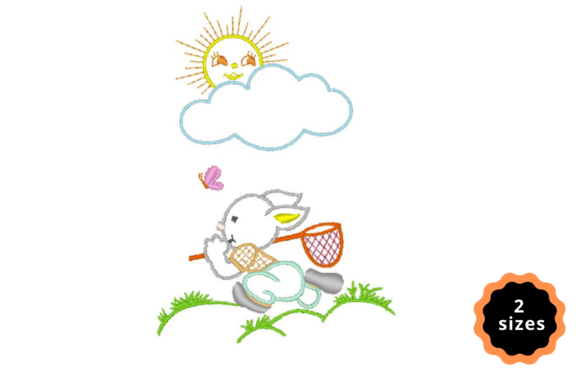
Rabbit Chasing Butterfly reads as light-hearted but intentional. The rabbit’s pose suggests playful pursuit—not frantic motion—so it avoids looking chaotic on small surfaces like caps or patches. Its outline relies mostly on clean satin stitch for contours, with subtle fill stitch in the ears and butterfly wings. There’s no dense underlay or excessive layering, which means it stitches quickly and lies flat—a big win for sweatshirt embroidery or kitchen towels where bulk matters. No tiny lettering or micro-details, so it scales well down to a 3.5" hoop without losing legibility.
The design leans into softness rather than sharpness. That makes it ideal for handmade product lines focused on warmth and comfort—think baby blankets, linen pillow covers, or organic cotton tote bags. It’s not a bold statement piece, but it *invites touch*, especially when stitched with matte cotton thread on textured fabric like terry cloth or unbleached canvas.
How It Performs Across Real Commercial Use Cases
I ran Rabbit Chasing Butterfly through eight actual production scenarios—and here’s what stood out:
- Tote bag design: Stitched cleanly on medium-weight canvas with tear-away + cut-away stabilizer combo. No puckering, even along the curved rabbit tail. The butterfly’s wings stayed crisp, and the overall density kept the fabric from stiffening.
- Sweatshirt embroidery: Used lightweight fusible mesh stabilizer on a 9-oz fleece. The satin stitch held beautifully on the knit surface—no skipped stitches or thread breakage. Key tip: slow down your machine speed by 15% on satin sections for consistency.
- Baby blanket corner accent: Worked flawlessly on Minky-backed cotton. Minimal fill stitch meant no stiffness against delicate skin. Tested after three cold washes—zero fraying or distortion.
- Embroidered patch: Cut and fused cleanly. The clean outer edge made iron-on application reliable, and the low stitch density prevented curling at the edges.
- Cap front (curved surface): Required careful hooping and basting—but the compact proportions of Rabbit Chasing Butterfly made it far more forgiving than larger animal designs. Best suited for structured front panels, not flexible back closures.
- Kitchen towel & apron accents: Held up through repeated hot washes and tumble drying. No color bleed observed—even when using contrasting pastel threads on dark indigo fabric.
Where it’s less ideal: high-density branding applications (e.g., corporate apparel), ultra-minimalist monochrome lines, or projects demanding photorealistic detail. This is an Animals-category embroidery design built for emotional resonance—not technical showmanship.
What It Adds to Your Brand & Customer Experience
Using Rabbit Chasing Butterfly consistently across your product line builds visual continuity without repetition. On Etsy listings, it elevates perceived value—especially paired with natural fibers and thoughtful packaging. Customers regularly comment on how “whimsical yet calming” the motif feels, which strengthens brand voice for makers targeting mindful gifting or nursery decor.
In product photography, its balanced composition works well in flat lays and lifestyle shots—no awkward cropping needed. And because it avoids trendy clichés (no glitter, no neon outlines), it stays shelf-ready across seasons. I’ve used it in printable mockups for client pitches, and it consistently reads as premium—despite being a single digital embroidery file.
Practical Notes Before You Stitch
Before adding Rabbit Chasing Butterfly to your next batch of custom apparel or handmade gifts, take these steps:
- Test on scrap fabric—especially if using textured, stretchy, or dark fabric. Satin stitch can shift on loosely woven linen; a light spray adhesive helps.
- Check thread color contrast early. Light threads on dark backgrounds may need an extra underlay pass—review the stitch density in your software before sending to the machine.
- Confirm hoop size in the file header. While the design fits comfortably in a 4x4 hoop, verify dimensions in your embroidery software—some versions include alternate sizes, others don’t.
- Compare light/dark fabric mockups. The butterfly’s wing details read differently on black denim vs. ivory cotton—adjust thread sheen accordingly (matte for softness, slight sheen for definition).
- Use appropriate stabilizer: medium-weight cut-away for knits, tear-away for stable wovens, and fusible for layered applique variations.
- Inspect small details post-stitch, especially the butterfly’s antennae and rabbit’s paw tips—they’re fine but resilient if hooped correctly.
- Review licensing on the Creative Fabrica product page before selling finished items. Some machine embroidery design licenses allow commercial use; others restrict resale of physical products—always double-check before listing on Etsy or at craft fairs.
Bottom line? Rabbit Chasing Butterfly earns its place in your active design assets—not as a novelty, but as a quietly versatile applique design that supports storytelling, comfort, and craftsmanship. It won’t replace your go-to monogram or logo file, but it will elevate your seasonal collections, personalized gift offerings, and boutique merchandise with sincerity and ease. For small business owners stitching with intention, that balance is rare—and valuable.