Rabbit Face Roses
First Impression: Playful, Not Precious
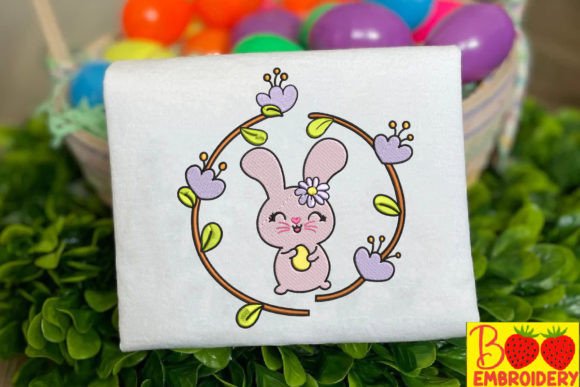
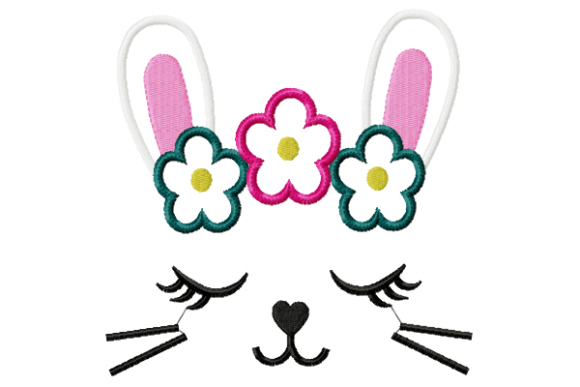
When I opened Rabbit Face Roses for the first time, I didn’t see a “cute overload” — I saw intention. The rabbit’s face is round and approachable, not overly detailed or fussy; the roses bloom softly around the ears like they grew there. There’s no forced symmetry, no stiff posing — just gentle whimsy. It lands squarely in the Woodland Animals category, yes, but it doesn’t feel like a stock forest motif. It feels handmade, like something you’d sketch on a napkin before digitizing. That’s a good sign. For embroidery designers who’ve seen too many over-digitized bunnies with laser-cut eyes and cartoonish grins, Rabbit Face Roses breathes.
A Real-World Test: Embroidering a Linen Baby Apron
Last week, I used Rabbit Face Roses on a 100% linen baby apron — lightweight, slightly nubby, and destined for a boutique’s newborn gift set. I chose a mid-weight cutaway stabilizer (not overkill, not under-supported), hooped carefully to avoid puckering, and stitched at medium speed. What stood out wasn’t just how cleanly the satin stitch wrapped the rabbit’s outline, but how forgiving the fill stitch was across the rose petals. No skipped stitches, no thread nesting — even where the design curves near the ear base. That tells me the digitizing respects fabric movement. Customers won’t see “machine embroidery” — they’ll see “thoughtfully made.” And that matters when your price point leans into handmade product value.
Where It Shines (and Where It Asks for Care)
Rabbit Face Roses works beautifully on:
- Custom apparel: Especially sweatshirt embroidery and toddler tees — the shape scales well without losing charm.
- Tote bag design: Centered on canvas or cotton duck, it reads clearly from three feet away.
- Baby embroidery: On onesies, burp cloths, or pillow covers, its soft edges feel age-appropriate — not too busy, not too sparse.
- Holiday embroidery: Pair it with subtle green or blush thread for Easter or spring baby showers — no need for bells or bows.
- Embroidered patch: Stitch it onto twill or denim backing, then heat-seal or sew on — the clean outer edge makes finishing tidy.
But — and this is where experience kicks in — don’t rush it onto every surface. Avoid using Rabbit Face Roses on:
- Ultra-thin fabrics like silk charmeuse without extra stabilizer (the fill stitch can telegraph).
- Highly textured surfaces like bouclé or thick terry cloth — detail in the rose centers may blur.
- Caps or curved hats unless you’ve tested hoop placement and tension on a similar blank first.
- Dark fabric without checking thread color contrast in natural light — some rose tones vanish if your red thread lacks warmth.
What It Does for Your Craft Business
If you’re an Etsy seller or small shop owner, Rabbit Face Roses isn’t just another embroidery file — it’s a quiet brand builder. Its tone supports storytelling: “hand-stitched with care,” “designed for little hands and big imaginations,” “a woodland moment, stitched slow.” That resonates with buyers who scroll past mass-produced designs looking for authenticity. I’ve watched customers linger longer on listings featuring this kind of visual personality — especially when paired with a simple printable mockup showing the design on a cream-colored tea towel or oatmeal sweatshirt. It elevates perceived value without demanding premium pricing.
For commercial embroidery shops, it’s reliable repeat work. No tiny lettering to fuss over, no dense clusters that cause thread breaks on long runs. The stitch density feels balanced — enough coverage to read well on apparel, light enough to drape naturally on baby blankets or kitchen towels. And because it avoids extreme detail, it holds up through multiple washes when finished with quality thread and proper trimming.
Designer Notes You’ll Actually Use
Before stitching your first client piece or listing your first batch of embroidered totes, do these five things:
- Test on scrap fabric — same weight and weave as your final project. Watch how the rabbit’s cheeks puff or flatten. Adjust tension if needed.
- Check thread colors in daylight and under warm bulb light. A rose that looks vibrant on screen might mute on oatmeal linen.
- Review stitch density visually — zoom into the petal edges in your embroidery software. Are they smooth? Or jagged? Jagged = potential snag risk on baby items.
- Confirm hoop size. If your machine requires frequent re-hooping for this design, factor that into production time — especially for custom apparel orders.
- Verify licensing. Since this is a machine embroidery design intended for both personal and commercial use, double-check whether resale of finished products or digital embroidery file redistribution is permitted. When in doubt, contact the creator — clarity now saves disputes later.
Final Thought: It’s Not Just a Design — It’s a Vibe Anchor
Rabbit Face Roses doesn’t shout. It invites. That’s rare in a saturated market of embroidery assets. Whether you’re building a craft business, curating nursery decor, or stitching personalized gifts for friends, this design earns its place by supporting your voice — not competing with it. It fits naturally into a cohesive collection: pair it with simple leaf motifs or minimalist mushrooms, not clashing florals or hyper-realistic foxes. Used well, it becomes part of your signature style — not just another download in your folder.
So yes — it’s playful. Yes — it’s woodland-themed. But more importantly, Rabbit Face Roses is practical, adaptable, and quietly confident. And in embroidery, that’s the kind of design that gets stitched again and again.